Sodding and Seeding Services in Pequot Lakes, MN
A lawn is supposed to be the easy part. But if the soil is compacted, the grade holds water, or the surface dries out unevenly, grass doesn’t stand a chance. You can throw down seed. You can fertilize. You can water like crazy. And you still end up with thin patches, washouts, and weeds taking the best spots.
Sodding and seeding in Pequot Lakes, MN is often the most direct way to reset a lawn after construction, drainage work, tree removal, or years of decline. The catch is that turf only establishes as well as the site allows. That’s where the work is. At CJ’s Landscaping Company LLC, we treat Sodding and seeding like an installation job—because it is. The prep makes the difference. Everything else follows.
What this service is, in plain terms
This service is the professional installation of new turf using either sod or seed. Sod arrives as mature grass in rolls and is laid over prepared soil. Seed is applied to prepared soil, then protected and managed so it can germinate and root.
Both can work. Both can fail. The outcome comes down to site conditions, timing, and how the install is handled.
This service is a good fit when you have:
- Bare soil that’s turning into mud and erosion
- A lawn that keeps thinning no matter what you do
- Areas that were torn up by equipment or renovations
- Compacted ground that won’t grow healthy grass
- A property that needs a “finished” look again
If you’ve tried reseeding more than once and it never really fills in, there’s usually a reason. Soil can be too tight, too wet, too poor, or too shaded. This is usually where people run into problems—because seed can’t fix a site issue by itself.
Choosing between sod and seed
There isn’t a universal best answer. The right option depends on how quickly you need coverage, how the area handles water, and how consistent you can be with early care.
When SOD installation makes sense
SOD installation is the go-to when you want fast, uniform coverage and a lawn that becomes usable sooner. It’s also a strong option for slopes or any area that’s prone to washout, because the soil gets protected immediately.
Sod tends to be the better fit when:
- You want quick results that look even from the start
- Stormwater or runoff has been washing soil away
- You’re finishing a project where bare dirt can’t sit exposed
- You need a predictable surface for pets, kids, or daily use
Sod isn’t a “set it and forget it” product. The first couple weeks matter. Roots have to knit into the soil below. But when the prep is right and watering is consistent, sod establishes quickly and reliably.
When seeding installation is the better fit
Seeding installation is often the better choice for larger areas, lower-traffic spaces, or properties where you’re okay with a more gradual establishment. It’s also useful when you want a specific turf blend for sun/shade conditions.
Seed tends to be the better fit when:
- The project area is large and you want flexibility
- You can water consistently during germination
- You’re aiming for a turf type that matches the property conditions
- You’re not in a rush to use the lawn heavily right away
With seeding lawns, the biggest factor is consistent moisture and protection. Seed that dries out repeatedly germinates unevenly. Seed that isn’t protected can wash away or get eaten. It’s simple, but it’s where a lot of DIY projects go sideways.
How professional sodding and seeding installation actually works
Whether we’re laying sod or applying seed, the job is built around the same priorities: stable grade, workable soil, and consistent early moisture. The rest is details.
1) Site evaluation and a realistic plan
Before anything goes down, we look at the conditions that will decide success:
- Is water draining properly, or pooling in low spots?
- Is the soil compacted from construction or equipment traffic?
- Is runoff cutting across the area during storms?
- How much sun does the space get, and where does shade dominate?
A lawn can’t outgrow poor drainage. It also can’t establish in soil that’s hard as a parking lot. This part isn’t optional.
2) Grading and soil preparation
This is where good lawns are made.
Depending on the site, preparation may include:
- Removing debris, rocks, and poor-quality fill
- Correcting minor grades so water moves the way it should
- Loosening compacted soil so roots can penetrate
- Adding topsoil or amendments if soil quality is weak
- Final raking and smoothing so the surface is even and consistent
This is also where
turf grass installation quietly fails when it’s rushed. Sod placed on tight, compacted soil might green up, then stall because roots can’t push down. Seed spread over poor soil often comes in thin and weedy because grass can’t compete early.
3) Sod laying or seed application (done correctly)
For sod, we lay rolls tightly with staggered seams, cut edges cleanly, and make sure the sod is in firm contact with the soil below. Air pockets are a problem. They dry out fast and prevent rooting.
For seed, we apply it at the proper rate, ensure seed-to-soil contact, and protect it. That might mean a light topdressing, erosion control blanket, or other stabilizing measures depending on slope and exposure.
That’s the difference between professional
sodding installation and
seeding installation and the “looks okay for two weeks” outcome.
4) Watering guidance and early care
Early care is where lawns are won or lost.
Sod needs frequent watering at first so the underside stays consistently damp while roots knit into the soil. Seed needs the top layer of soil kept evenly moist during germination. Not soaked. Not bone-dry by noon. Consistent.
We give clear watering guidance based on conditions. Weather, soil type, exposure. Practical instructions you can follow.
5) Establishment and first mow expectations
New turf shouldn’t be pushed too early. Mowing too low too soon can weaken young roots. Heavy traffic can rut or shift turf before it’s established. The early phase is about rooting first, then gradually transitioning into normal maintenance.
What you should expect when it’s done right
A properly installed lawn changes the property in a way you notice immediately—and appreciate later.
No patchwork look, fewer thin areas
Bare soil gets protected and stabilized
Smooth grading helps reduce puddling and washouts
Healthy roots lead to thicker, more resilient grass
The yard feels complete again
When homeowners look up sod installation companies, they’re usually searching because they want dependable results. The irony is that dependability has less to do with the sod itself and more to do with what’s under it.
Common reasons homeowners choose sod or landscape seeding
Different sites call for different approaches. These are the situations we see most often.
New construction and major yard disturbances
Construction leaves soil compacted and inconsistent. Even “good” topsoil gets mixed with subsoil and debris. A lawn needs rebuilding from the soil up, not seed scattered over hard ground.
Drainage changes and regrading work
After drainage work, you often have exposed soil and disturbed zones that need stabilization. Sod can provide quick cover. Seed can be efficient for larger areas. Many projects use both—strategically.
Thin turf and recurring bare spots
If the same spots fail again and again, it’s not bad luck. It’s usually compaction, shade, soil structure, or water flow. Landscape seeding works best when the site is prepared to support growth, not fight it.
Slopes and erosion-prone areas
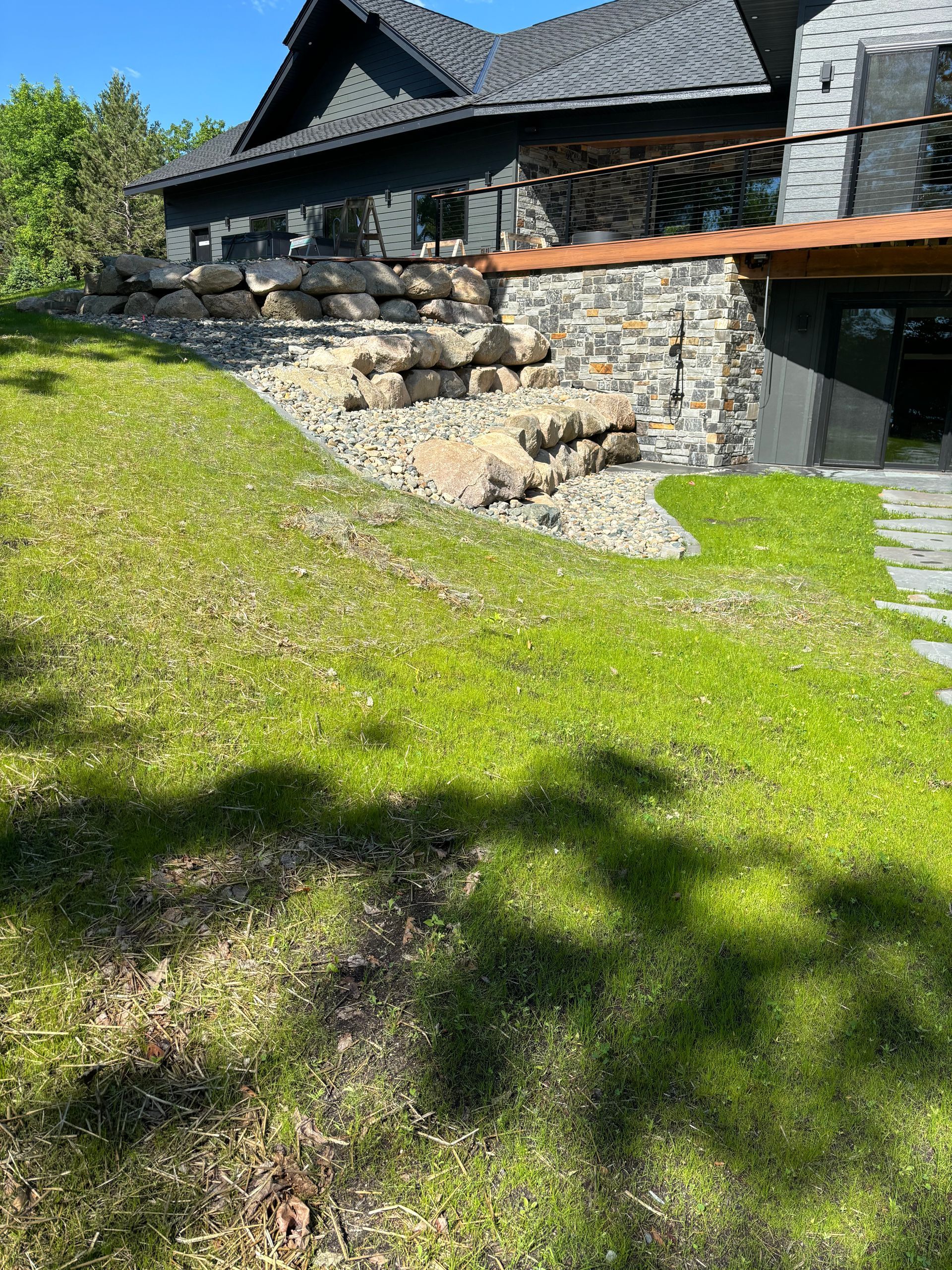
Slopes are vulnerable during storms and spring melt. Sod helps stabilize quickly. Seed can work too, but it usually needs protection to keep it in place until it roots. The right choice depends on grade and exposure.
Why customers work with CJ’s Landscaping Company LLC
Grass is simple. Establishing a lawn that holds up is not.
People bring us in when they want it done correctly—especially when the lawn is the last step after a bigger improvement and they’re ready for the property to feel finished again.
What we emphasize:
Honest site evaluation: We address the reason turf isn’t thriving
Preparation standards: Grading, soil conditioning, and smooth finish work
Method selection that fits the site: Sod, seed, or a combination, based on function and timing
Clear aftercare guidance: Straight instructions that help turf establish evenly
Professional execution: Clean edges, consistent coverage, and a finished look
The goal is a lawn that establishes well and gets easier to manage over time. Not one that needs constant patching.
Areas We Serve
Pequot Lakes, Outing, Fifty Lakes, Nisswa, Lakeshore, Hackensack, Crosslake, East Gull Lake, Walker, Emily, Pine River, Brainerd, Baxter, Breezy Point, Crosby
Frequently Asked Questions
Is sod or seed the better option for my yard?
Sod provides immediate coverage and is often a safer choice where erosion is a concern or where you want fast, uniform results. Seed is a good option for larger areas and can be customized with specific grass blends, but it requires consistent watering and protection during germination. The best option depends on site conditions and how quickly you need coverage.
What do I need to do before the installation starts?
Access is the big one. Clearing furniture, toys, and obstacles makes the work smoother and helps prevent damage to items during installation. It’s also helpful to point out sprinkler lines, shallow utilities, or anything underground that could affect grading or prep.
How soon can the lawn be used after installation?
Sod can usually handle light use sooner than seed, but both need time to root. Limiting foot traffic early helps prevent shifting, rutting, and uneven establishment. We’ll give guidance based on the method used and the site’s conditions.
What affects the scope of the project?
Area size, soil condition, grading needs, access for equipment, and whether erosion control is needed all influence scope. Drainage challenges and poor soil structure can also increase the amount of prep work required for good results.
Why does new grass sometimes come in patchy?
Patchiness is commonly caused by inconsistent moisture, poor seed-to-soil contact, washout after heavy rain, or compacted soil that limits root growth. With sod, patchy areas often trace back to air pockets or dry zones during the first couple of weeks. Good preparation and consistent watering prevent most of these issues.
Want a lawn that actually takes?
If you’re finishing a project, dealing with bare soil, or tired of fighting thin turf every season, we can help. We’ll evaluate the site, recommend the right approach, and complete the work with the kind of preparation that gives new turf the best chance to establish evenly. Contact CJ’s Landscaping Company LLC to schedule an on-site evaluation in Pequot Lakes, MN.