Shoreline Restoration Services in Pequot Lakes, MN
A shoreline isn’t a fixed line on the map. It’s a working edge. Water rises and drops. Ice pushes. Wakes roll in. Rainwater finds the quickest path downhill. And over time, all of that adds up—especially on properties where the bank is steep, the soil is sandy, or foot traffic keeps wearing the same spot.
When the shoreline is stable, you don’t think about it much. The water stays clearer after storms. The bank holds its shape. Plants fill in naturally. When it’s not stable, the signs show up fast: exposed roots, slumping sections, undercut edges, and that familiar muddy plume after heavy rain. Shoreline Restoration in Pequot Lakes, MN is about getting that edge back under control—without turning your lakeshore into something that looks or feels out of place.
At CJ’s Landscaping Company LLC, we treat shoreline projects like what they are: part construction, part land management, part long-term planning. No single material fixes every shoreline. And no shoreline holds up if you ignore water movement. This is usually where people run into problems.
What shoreline restoration is—and what it’s not
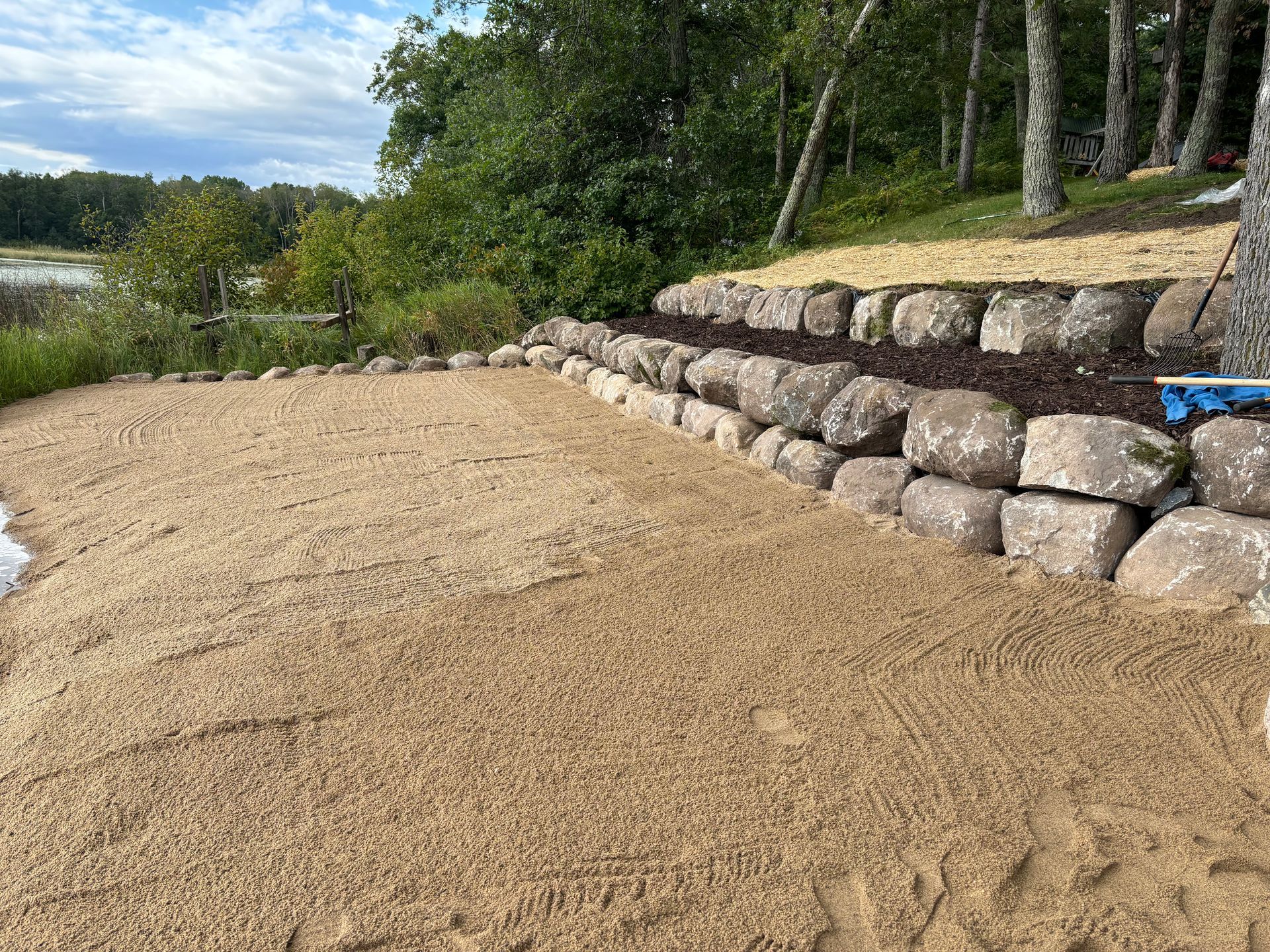
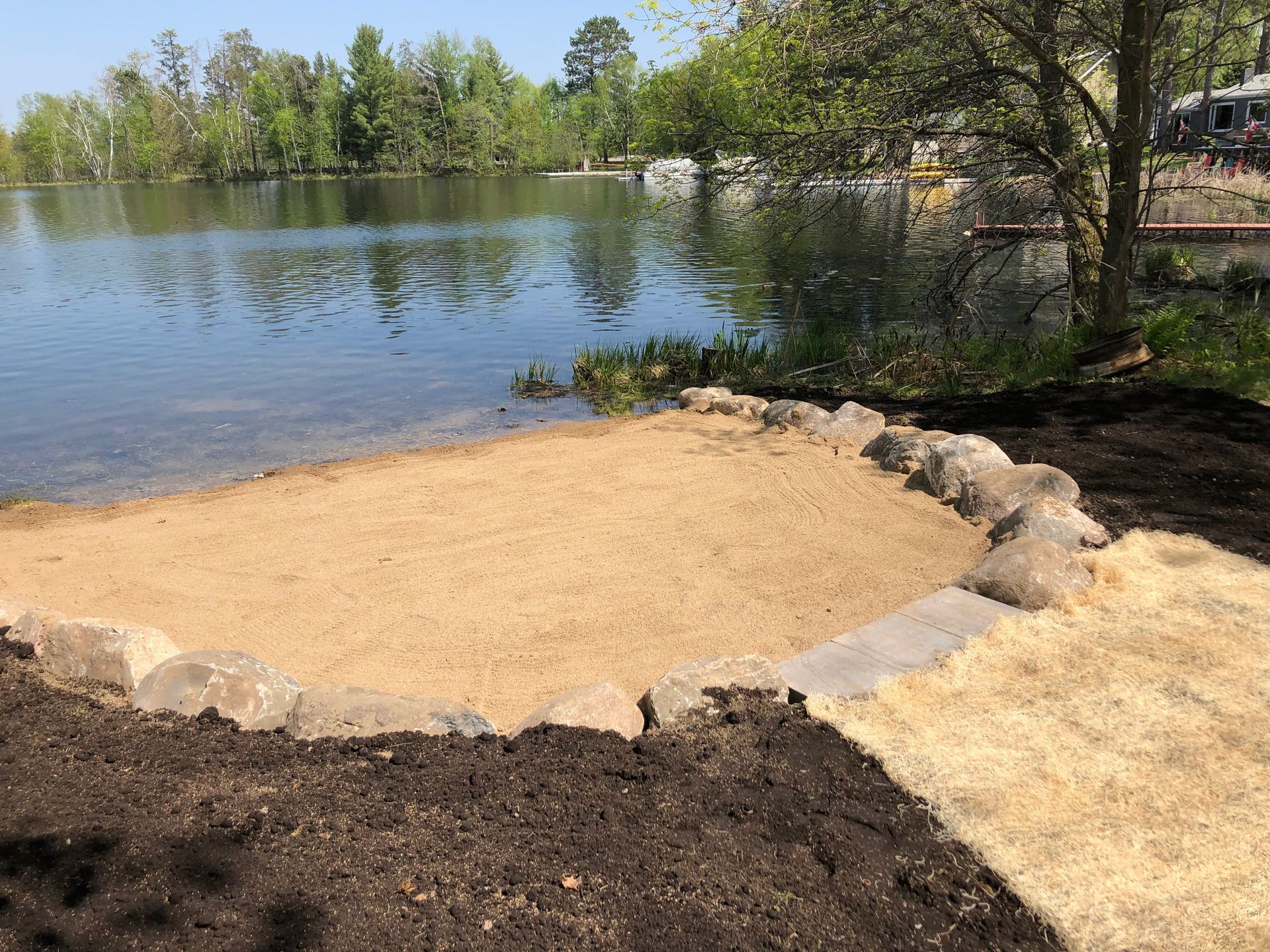
Shoreline Restoration is the process of stabilizing the land-water boundary so it resists erosion, handles seasonal change, and supports healthy growth along the edge. It typically involves reshaping the bank where needed, reinforcing the toe and slope, improving drainage and runoff behavior, and installing plantings that can actually survive shoreline conditions.
It’s not a quick “cover it with rock and call it good” solution. That approach might look neat for a while. Then high water shows up. Or ice moves. Or a few heavy rains hit back-to-back. Weak spots get exposed, and you’re right back where you started—sometimes worse.
A well-built shoreline system is designed to take pressure from multiple directions: wave energy, runoff, saturated soils, and winter movement. Over time, the shoreline should get stronger, not more fragile. That’s the point of
lakeshore restoration when it’s done correctly.
Who this is meant for
Shoreline work makes the most sense for property owners who want a stable, natural-looking edge that doesn’t require constant patching. It’s also a smart move if you’re seeing erosion creep closer to patios, fire pit areas, paths, or structures near the water.
You don’t have to wait for a dramatic collapse. In reality, early restoration is often the cleaner project. Less disruption. Fewer emergency decisions. More options. Once a bank starts failing in a serious way, you’re rebuilding structure—not just improving stability.
How shoreline restoration works in the real world
Every site has its own personality. Some shorelines are battered by wind-driven waves. Others take a beating from runoff. Some are quiet most days but get torn up by ice movement every winter. The plan has to match the conditions.
Still, the best restoration work follows a steady logic: stabilize the base, manage the water, rebuild the profile, and establish plants that hold it together.
Start with an honest assessment
We walk the shoreline and figure out what’s causing the loss.
- Is the bank being undercut at the waterline?
- Is runoff carving channels down to the lake?
- Are wakes consistently hitting one exposed area?
- Is the slope too steep to hold soil long-term?
- Are people entering the water in the same spot and wearing it down?
We also look at practical realities: access for equipment, existing structures nearby, and how the shoreline is actually used. Shoreline improvements should fit your day-to-day life, not force you to avoid the area.
Permitting and compliance
Shoreline work isn’t the same as standard landscaping. There are typically rules and permitting requirements that affect what can be installed, where, and how. We don’t treat that as an afterthought. If you skip this part or treat it casually, it has a way of coming back later.
A good plan respects environmental guidelines, protects habitat, and keeps the project on solid ground from a compliance standpoint. Simple as that.
Reshaping the bank when needed
A bank that’s too steep is always fighting gravity. Add saturation and wave action, and it starts losing. Sometimes the biggest improvement is adjusting the slope so it can support itself—and support vegetation.
That doesn’t mean flattening everything into a boring grade. It means creating a profile that holds soil, drains properly, and doesn’t keep slumping every season.
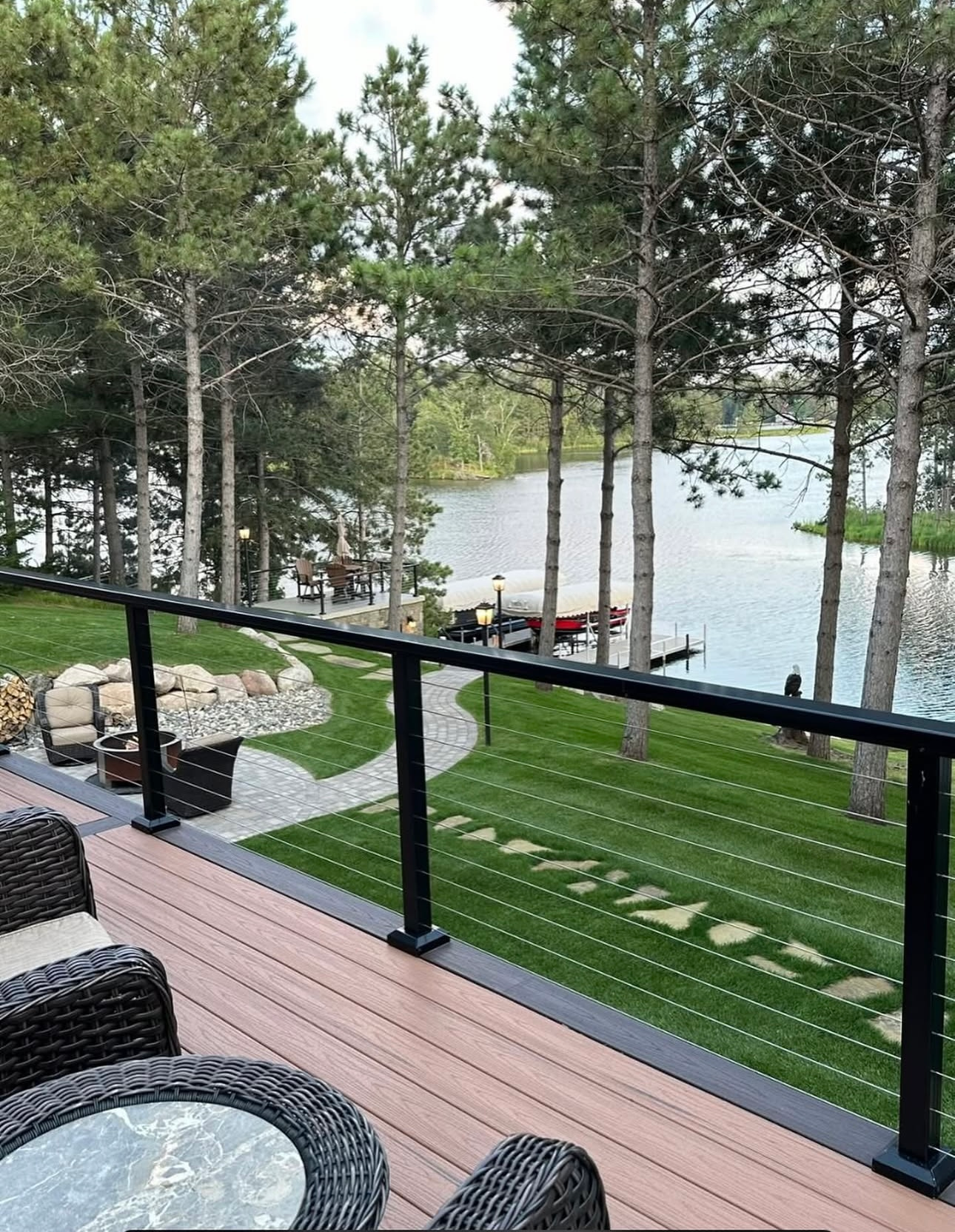
Stabilization methods that match the site
Stabilization isn’t one product. It’s a set of tools, used in the right places.
- Toe protection at the waterline: Often rock, placed to protect the base of the slope from undercutting. The toe is the foundation of the shoreline. Ignore it and the upper bank never really has a chance.
- Natural fiber reinforcement: Coir logs, biologs, and erosion control blankets help hold soil while plants establish. They’re not “armor.” They’re support during the vulnerable stage.
- Planting and live staking: Roots provide long-term strength. The right plants can tolerate fluctuating water, wet soils, and dry spells without dying off every season.
- Runoff control: If water is accelerating down your yard to the lake, restoration has to address that flow. Otherwise, the shoreline will keep taking the hit.
This is where
shoreline restoration services separate into “looks good on install day” versus “holds up after a few seasons.” Materials matter, yes. But placement, staging, and water behavior matter more.
Installation sequence (it matters more than people think)
We stabilize the shoreline edge first. Then we rebuild and secure the upper areas. Then we install soils and plantings. Then we finish grading and access details.
Rushing that sequence creates soft spots that wash out. Or you end up walking equipment over finished areas and undoing your own work. Most shoreline failures after a “repair” job are really sequencing failures. The shoreline didn’t get a chance to become stable before it was asked to perform.
Establishment and early maintenance
The structure should be stable immediately. The plant community takes time.
Expect a growing season for meaningful root establishment. During that first season, maintenance is usually simple but important: watering during dry stretches, keeping heavy foot traffic off sensitive areas, and watching how the shoreline responds after major rain events.
Not complicated. Just consistent.
Results that matter (not just a cleaner look)
A restored shoreline should deliver real, practical outcomes.
Soil stays on your property instead of ending up in the lake.
You’ll notice it after storms once runoff and sediment are better controlled.
Freeze-thaw cycles and water fluctuations don’t have the same impact when the shoreline is built as a system.
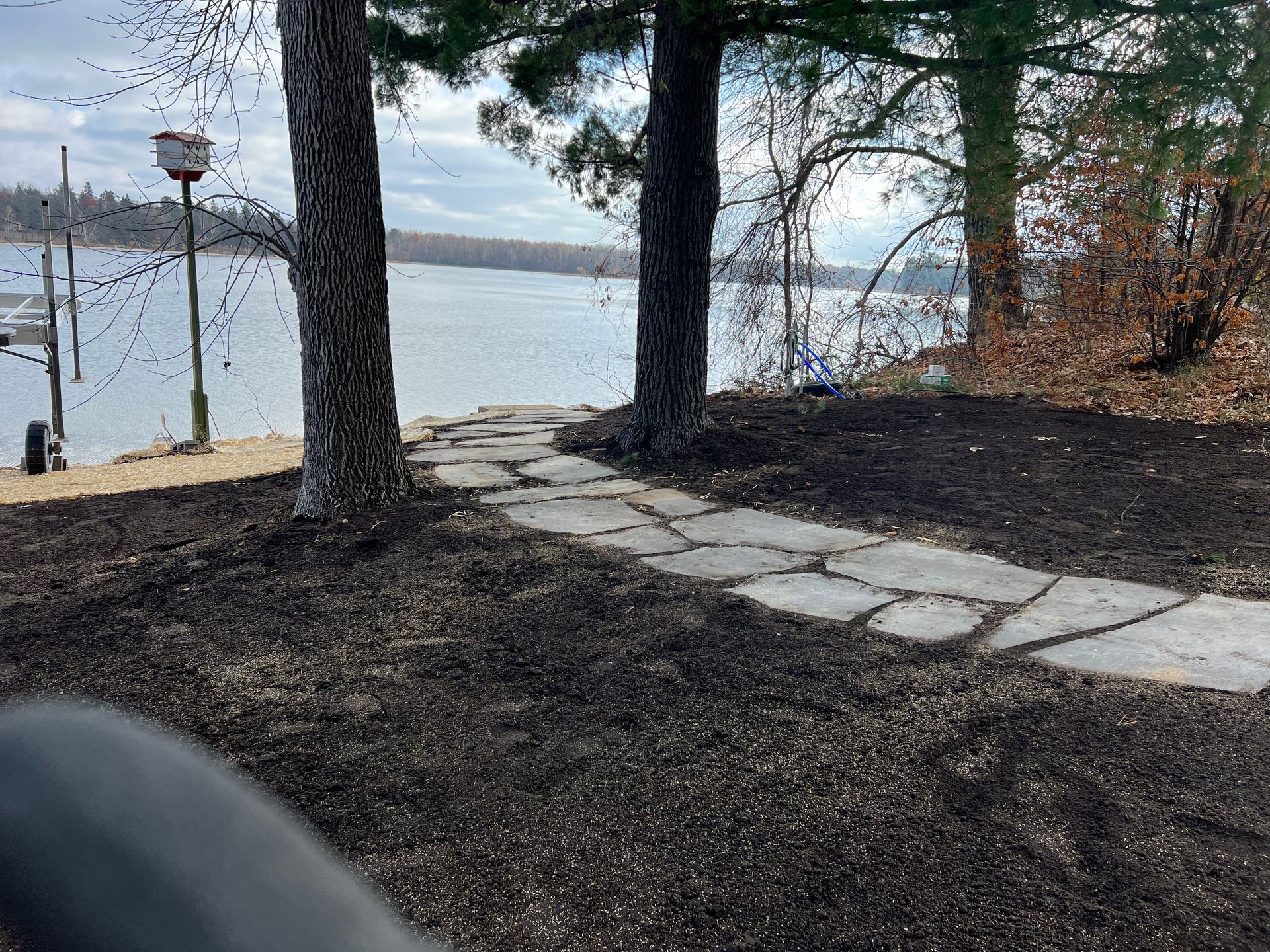
You can create intentional entry points instead of scrambling down unstable sections.
Once established, you’re not constantly reworking the same spots every year.
Common situations where restoration is the right call
Some shorelines fail loudly. Others fail quietly.
1. Undercut banks and slumping edges
Undercutting at the waterline is one of the most common failure points. Once the toe erodes, the upper bank loses support and slumps. That’s when you get sudden losses after storms even if things looked “fine” a week earlier.
2. Muddy water after rain
If the water clouds up near your shoreline after every storm, sediment is moving. It might be coming off the bank, or it might be coming from runoff channels feeding directly into the lake. Either way, the shoreline is taking a steady hit.
3. Previous fixes didn’t hold
A thin layer of rock over soft soil. A small wall without drainage. Mulch and seed on a steep bank. These are common attempts—and they rarely last at the waterline. The lake always finds the weak spot.
4. You want a natural look without sacrificing stability
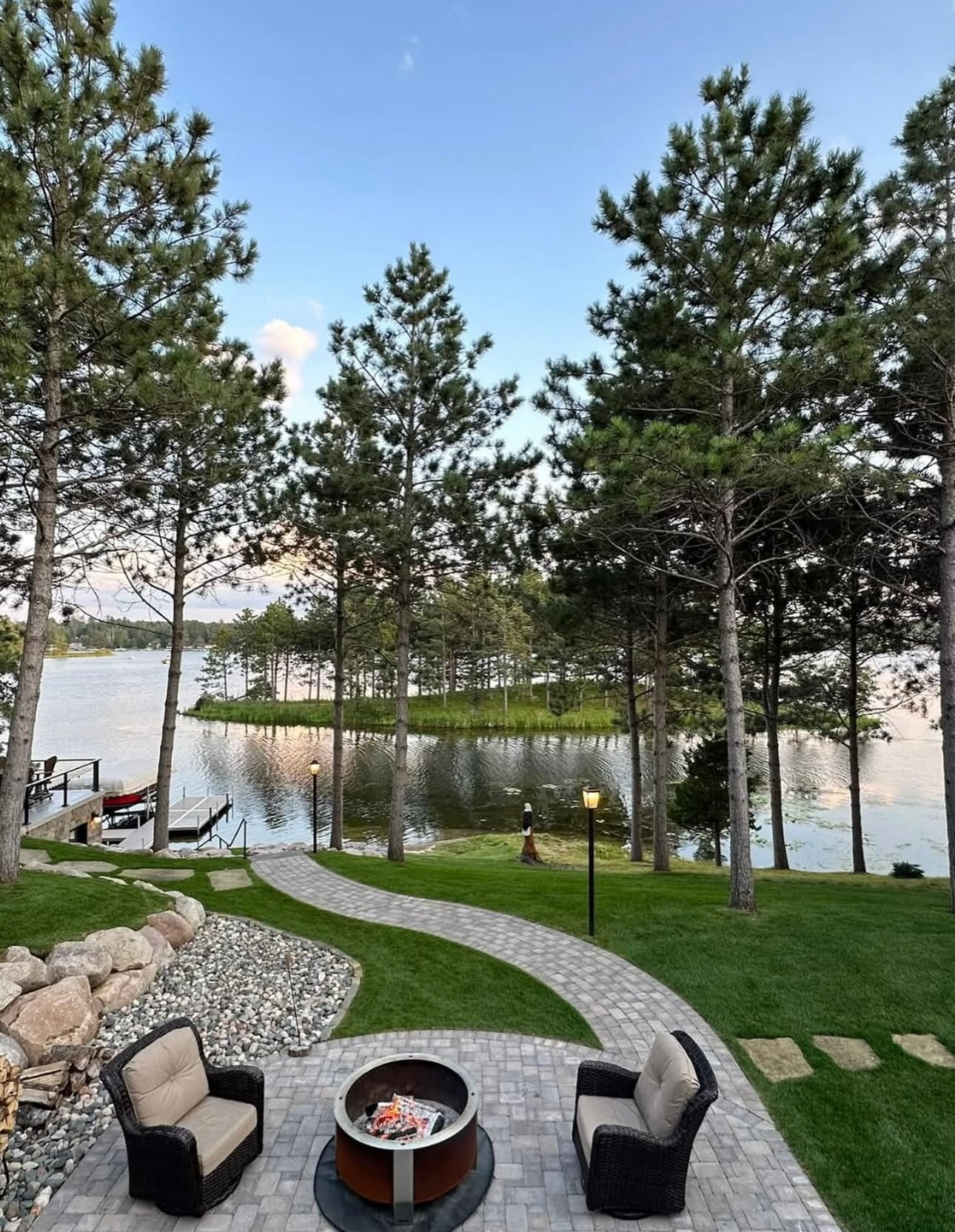
Plenty of property owners don’t want an armored edge that looks out of place. They want something that fits the setting, supports plant life, and still protects the property. That’s what modern restoration methods are designed for—when they’re planned properly.
5. Access is wearing the bank down
Foot traffic concentrates damage. Dock access, sitting areas, launch points—these create predictable erosion points. The fix isn’t “don’t use the shoreline.” It’s building stable access intentionally so the rest of the bank isn’t constantly being chewed up.
What separates professional shoreline work from “quick fixes”
Shoreline shortcuts don’t age quietly. They show up. Usually in the form of movement, washouts, or a shoreline that needs attention again immediately.
Professional projects come down to a few fundamentals:
A clear understanding of what’s driving erosion
A plan that addresses toe stability and runoff—not just the visible slope
Correct materials used in the correct locations
Installation sequencing that protects the work as it’s being built
A realistic plan for establishment
When people compare shoreline restoration companies, the best ones can explain their method without hiding behind vague promises. They’ll talk about water movement, soil behavior, toe protection, and how the shoreline will mature over time. That’s the conversation that matters.
How CJ’s Landscaping Company LLC handles shoreline projects
Our process is straightforward. It keeps the project organized and keeps expectations realistic.
1) Site evaluation
We review erosion patterns, bank profile, soil conditions, exposure, and site access. We also talk about use—because a shoreline that doesn’t fit how you live on the property won’t stay intact.
2) Method selection and planning
We build the plan around the shoreline’s needs, not the other way around. Toe protection where required. Reinforcement where it makes sense. Planting strategies that can survive the shoreline environment. Runoff controls if water is part of the problem.
3) Permitting alignment
We support the project with the documentation and approach needed to keep it compliant and responsible.
4) Construction and installation
Stabilize the edge first. Build upward from there. Then finish grading and access points. Order matters.
5) Establishment guidance
Clear expectations for the first season—watering, traffic management, and what to watch after heavy weather.
That’s how shoreline work stays stable beyond the first good-looking photo.
Areas We Serve
Pequot Lakes, Outing, Fifty Lakes, Nisswa, Lakeshore, Hackensack, Crosslake, East Gull Lake, Walker, Emily, Pine River, Brainerd, Baxter, Breezy Point, Crosby
Frequently Asked Questions
How can I tell if restoration is necessary, or if it’s just normal shoreline change?
Some seasonal change is normal, but repeated soil loss, slumping, exposed roots, or undercut edges are strong indicators that the shoreline is failing. If you’re doing the same “touch-up” work every year and it never holds, that’s also a sign the underlying issue hasn’t been addressed.
What factors change the scope of a shoreline restoration project?
Bank height, slope steepness, soil type, wave exposure, and access all affect scope. Runoff behavior matters too—if water is channeling to the lake, the solution needs to address that. Permitting requirements and the chosen stabilization method also influence the overall plan.
Will it look finished immediately, or does it take time?
The shoreline should look clean and intentional when the work is complete, but the natural look improves as plants establish. Root growth takes time, and most sites look noticeably fuller after a growing season.
How long does a typical shoreline restoration take?
Project length depends on the size of the shoreline, access, water level conditions, and the methods being installed. Some projects move quickly once permitted and staged, while others take longer due to site complexity and installation sequencing.
Can I still use the shoreline during and after restoration?
Yes, but it’s best when access is planned and controlled. Most erosion damage happens where traffic concentrates, so we typically incorporate stable access points and protect sensitive areas while vegetation establishes.
Ready to get your shoreline back under control?
If your shoreline is losing ground, washing out after storms, or taking constant maintenance to keep presentable, it’s worth a professional look. We’ll assess what’s happening, talk through practical options, and recommend a restoration approach that fits your shoreline and how you use the property. Contact CJ’s Landscaping Company LLC to schedule an on-site evaluation.