Landscaping step stones Pequot Lakes, MN
Steps aren’t flashy. They’re just necessary. And you really feel the difference when they’re not done right. A gentle slope that seems harmless in July turns slick in April. A “shortcut” across the lawn becomes a worn trench. That one awkward drop off the patio? It’s fine—until it settles and starts catching toes.
Landscaping step stones Pequot Lakes, MN is about making movement through the yard safer and more natural without turning everything into a full hardscape project. Sometimes the answer is a simple line of stones set flush in turf. Other times, it’s a run of Outdoor Steps built into a grade. Either way, the goal stays the same: stable footing, comfortable spacing, solid base work, and drainage that keeps everything from shifting over time.
At CJ’s Landscaping Company LLC, we treat steps like small structures. Not decorations. The stone you see is only part of the job. What’s underneath—base depth, compaction, leveling, and water behavior—is what keeps steps from heaving, rocking, or sinking after the first tough season. This is usually where people run into problems. A step can look perfect when it’s installed and still fail if it’s sitting on soft soil or placed where runoff concentrates.
What this service is and who it’s for
This service includes layout and installation of step features designed to move safely through changes in elevation—across lawns, through garden spaces, down slopes, and between patios, paths, and other landscape elements.
That can include:
- Individual stones spaced as a simple walking line
- Short runs of steps in planted slopes
- More structured step systems tied into retaining walls or patio edges
It’s a good fit for homeowners who want:
- Safer footing on uneven ground
- Cleaner access without wearing trails into turf
- A more finished connection between outdoor areas
- Steps that don’t turn into a yearly re-leveling project
If people naturally avoid a slope, or you keep seeing the same muddy wear line appear, it’s not a mystery. The yard is telling you where traffic wants to go. Steps give that traffic a better route.
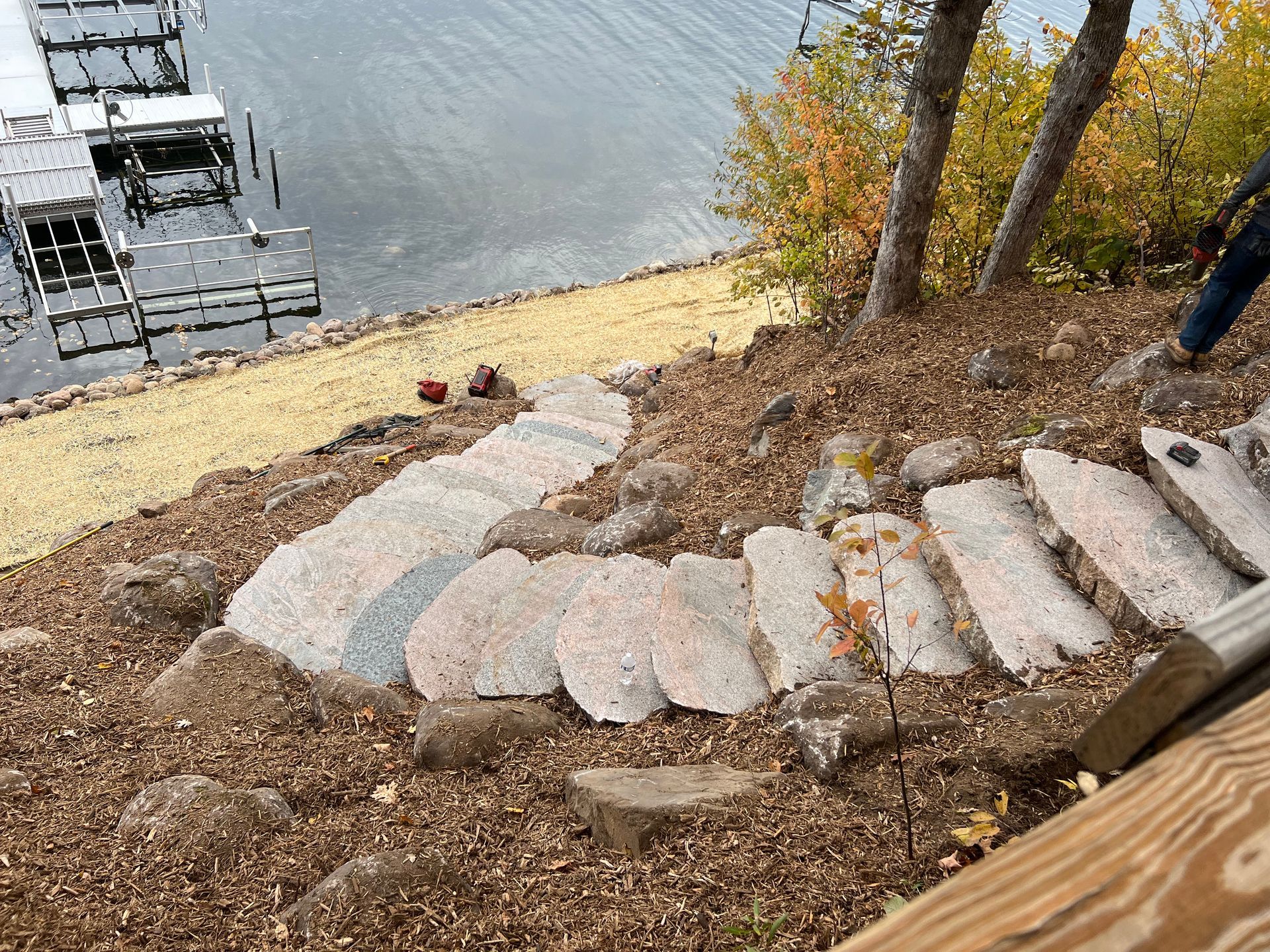
Step stones vs. built steps: picking the right solution
Not every property needs a full staircase. In many landscapes, the best answer is smaller, cleaner, and more natural-looking.
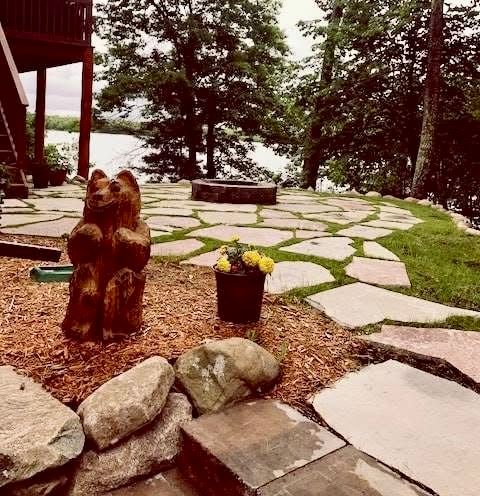
Garden Step stones for gentle grades
Garden Step stones work well for minor elevation changes and informal routes through turf or planting areas. They provide stable footing without building a full walkway, and they can blend into the landscape when installed properly.
They’re a strong option when:
- You want a simple path to a garden, shed, or seating spot
- The grade change is gradual
- You want the yard to feel open and not “overbuilt”
Set correctly, they feel natural. Set incorrectly, they feel like stepping across river rocks. Nobody enjoys that.
Pathway stones for clear, consistent travel lines
Pathway stones create a defined route through areas that stay damp, see heavy foot traffic, or connect frequently used outdoor spaces. They’re also a practical way to stop worn grass trails and reduce tracked-in mud.
The best paths don’t need signs. People just follow them because they make sense
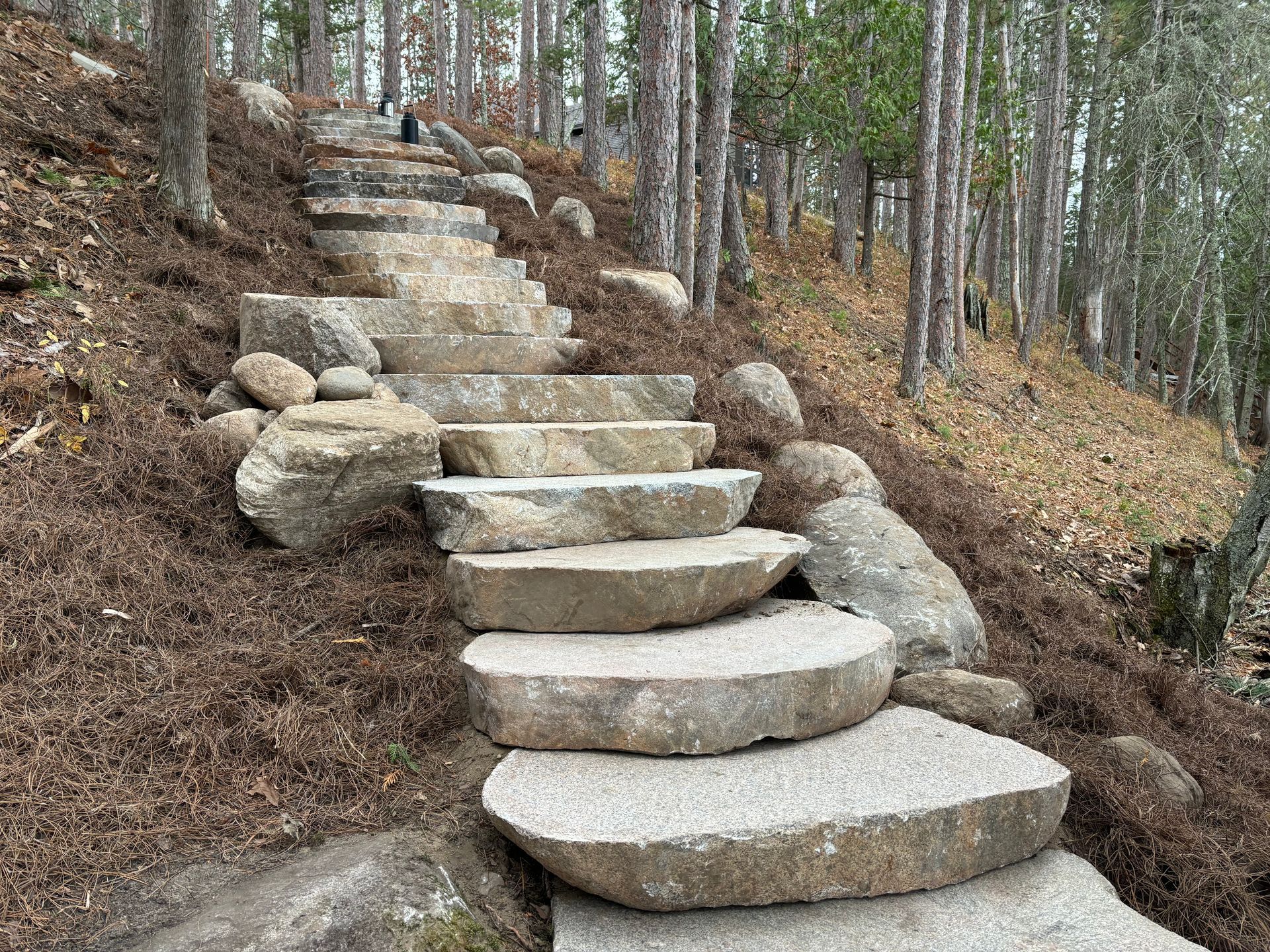
Outdoor Steps for steeper or more concentrated drops
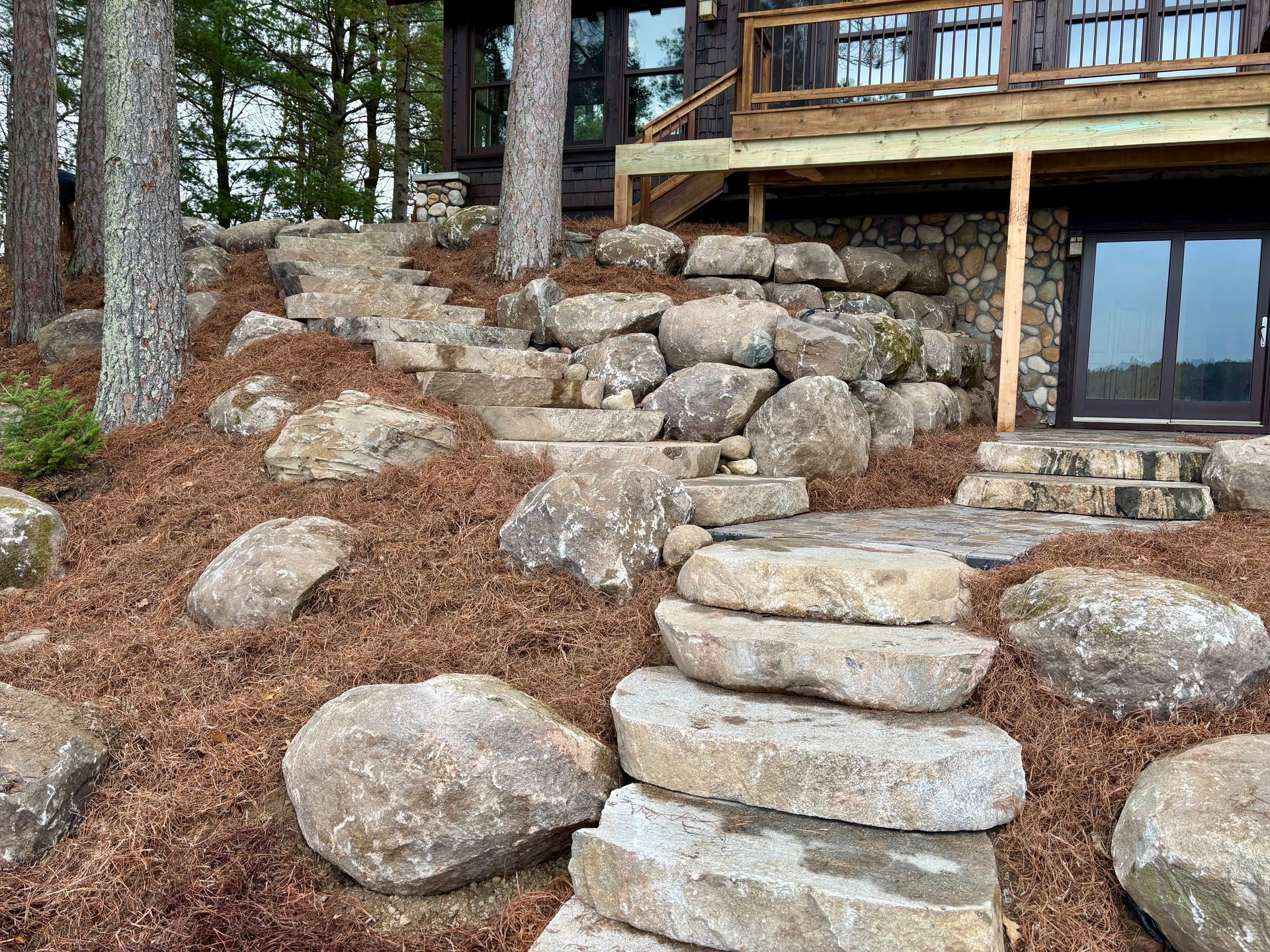
When the grade is steeper, or the drop happens quickly over a short distance, structured Outdoor Steps are usually the safer and more durable approach. These can be built with natural stone, modular block systems, or formed components depending on the design and site access.
The advantage is control—consistent rise and run, better drainage detailing, and stronger long-term performance when built correctly.
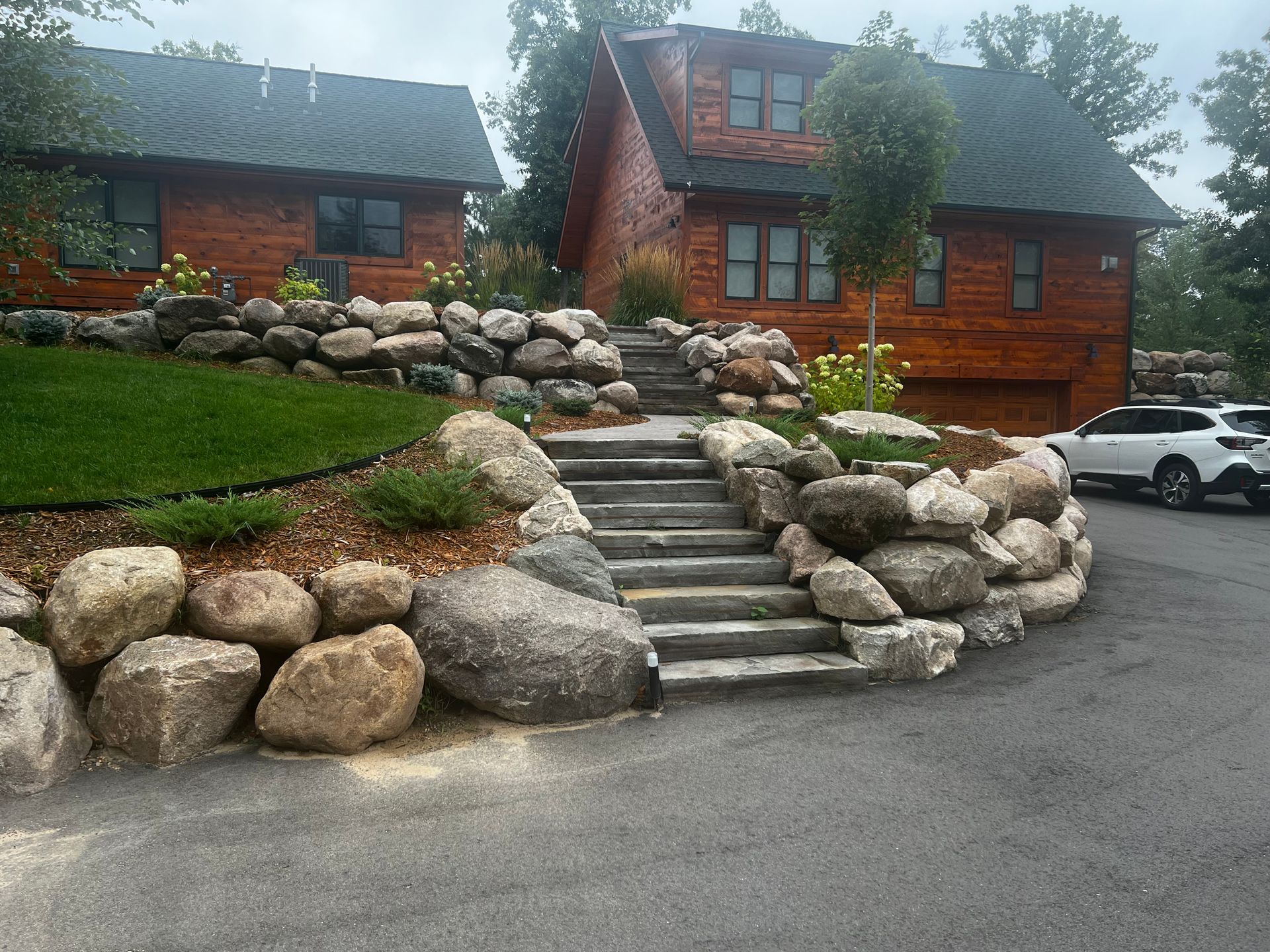
Concrete outdoor steps and precast solutions
In some situations, concrete outdoor steps are the right tool—especially where durability, clean geometry, and predictable footing matter. Concrete can be poured or installed using precast elements depending on the layout.
Concrete can also be finished for traction. That matters in wet weather and during freeze-thaw months.
How step stone installation is built to last
Whether it’s a simple stepping-stone line or a full run of steps, performance comes down to fundamentals: stable base, consistent elevation, and water management
Spacing isn’t a guess. Too close and people shuffle. Too far and people hop. Both feel wrong.
We lay out the route based on natural travel lines and a comfortable stride. Then we set elevations so each step feels steady and predictable—no awkward high steps, no surprise dips.
This is where longevity is decided.
Each stone needs a properly prepared base:
- Removal of soft organic material
- Correct base material where needed
- Leveling and compaction so the stone doesn’t settle unevenly
- Setting height relative to surrounding grade so it sits right long-term
A stone placed on loose soil might hold for a bit. Then it won’t
Stones need full support—not “balanced.” Full contact is what prevents rocking, especially with thinner stones or stones set into turf that will be mowed around.
Edge control matters too. Turf and soil slowly creep. Without clean finishing, stones get buried on one side, exposed on the other, and suddenly the step feels smaller and less stable
.
Steps should shed water, not trap it. Standing water softens soil, encourages settling, and leads to winter heaving.
This is usually where quick installs fail: no plan for runoff, and the base gets undermined season after season.
Material options and what they change
Material choice affects feel, maintenance, and the overall look of the yard.
1) Decorative step stones
Decorative step stones are popular for garden routes and informal paths through planted areas. They can be natural stone or cast products with texture. The key is comfort underfoot and a look that fits the surrounding landscape.
2) Round concrete step stones
Round concrete step stones are common for simple lawn routes because they’re consistent, easy to space, and clean-looking. Installed properly, they create a practical path without dominating the yard visually.
3) Lawn step stones
Lawn step stones are designed to be set flush with turf so mowing remains manageable and the yard still feels open. They’re often used for access to sheds, utility areas, or the route people use every day—whether you intended it or not.
Benefits you’ll notice right away
Steps are a practical upgrade. You feel it daily
Safer footing: Less slipping and fewer awkward steps on slopes
Cleaner travel lines: Reduced grass wear and fewer muddy shortcuts
Better access: Easier movement between outdoor areas in wet seasons, too
More usable landscape: Slopes become functional instead of avoided
A more finished look: Defined routes and clean transitions make the yard feel intentional
And the long-term benefit is maintenance. Well-built steps don’t become a yearly “fix it again” project.
Common situations where step stones or outdoor steps make sense
Some projects are planned. Others happen because the property keeps showing the same issues.
Repeated wear paths through turf
If a trail keeps appearing, it’s because people will always take the easiest route. Step stones protect the lawn and give that route a stable surface without requiring a full walkway.
Sloped access to gathering areas
A small grade change can be fine when dry and frustrating when wet. A few properly placed steps can make a fire pit or seating area usable more of the year.
Garden access without compacting beds
Steps give you access without trampling soil and damaging plants. That becomes more important as beds fill in and mature.
Cleaner transitions from hardscape to lawn
Patio edges and driveway transitions often need stable footing to prevent erosion and grade breakdown. A well-placed step or small run of steps can solve a problem that keeps creeping outward.
Why customers choose CJ’s Landscaping Company LLC
We don’t wing it. And we don’t build walls the same way on every property without checking the site conditions. But the standards stay consistent.
Steps aren’t complicated, but they’re unforgiving. If the base is wrong or the elevations are inconsistent, you’ll feel it every time you use them.
What we focus on:
- Comfortable spacing and consistent rise/run
- Proper base preparation and compaction
- Full support under each stone for stability
- Drainage-aware grading around the installation
- Clean finishing that holds up season after season
Our goal is straightforward: steps that feel natural to use and stay stable long-term.
Areas We Serve
Pequot Lakes, Outing, Fifty Lakes, Nisswa, Lakeshore, Hackensack, Crosslake, East Gull Lake, Walker, Emily, Pine River, Brainerd, Baxter, Breezy Point, Crosby
Frequently Asked Questions
How do I know if step stones are enough, or if I need full outdoor steps?
If the elevation change is gradual and spread out, step stones often work well. If the slope is steeper or the drop happens quickly, structured outdoor steps tend to be safer and more comfortable. We evaluate the grade and recommend what will feel natural underfoot.
Do step stones move over time?
They can if they’re installed over soft soil or without a compacted base. Proper excavation, base material, and leveling prevent most movement. When installed correctly, step stones stay stable and feel solid.
Can lawn step stones be installed without making mowing a hassle?
Yes. Lawn step stones can be set flush with the surrounding turf so mowing stays straightforward. The key is setting the correct height and finishing edges so turf doesn’t creep over the stone.
What affects the scope of a step installation project?
The number of steps, amount of grade change, soil conditions, drainage needs, and access for materials all affect scope. Material choice can also change labor requirements, especially when stones require fitting, shaping, or detailed finishing.
Are concrete steps slippery in wet conditions?
Concrete can be finished with textures that improve traction, and proper slope helps water shed off the surface. Tread depth and drainage detailing matter more than the material alone.
Let’s build steps that feel solid and stay that way
If you’ve got a slope that’s hard to use, a path that keeps turning into a rut, or you want a cleaner way to move through the yard, we can help. We’ll evaluate the grade, recommend the right step solution, and install it with the base prep and drainage awareness needed for long-term stability. Contact CJ’s Landscaping Company LLC to schedule an on-site evaluation.