Retaining Walls in Pequot Lakes, MN
Retaining walls aren’t just a landscaping detail. They’re a structural solution. Built the right way, they hold grade, control water, and keep the rest of the yard—and anything near it—from slowly shifting over time. Retaining Walls in Pequot Lakes, MN matter even more because freeze-thaw movement and seasonal moisture changes have a way of exposing shortcuts. A wall that looks fine the first year can start leaning by the third if the base, drainage, and backfill weren’t handled correctly.
At CJ’s Landscaping Company LLC, we treat retaining walls like what they are: a system. Not a stack of blocks. Not a “quick fix.” A system that’s built to stay put.
What a retaining wall really does
A retaining wall is designed to resist the sideways pressure of soil. That pressure isn’t constant—it changes with soil type, slope, saturation, and wall height. Add water behind the wall and the force goes up fast. That’s usually where people run into problems.
If you’ve seen a wall that’s bowing, cracking, or tipping forward, it’s almost never because the blocks were “bad.” It’s because the wall wasn’t built to manage the forces behind it. Base too shallow. Drainage skipped. Backfill dumped in without compaction. Small decisions that turn into big movement.
When a wall is built correctly, Retaining Walls do something simple: they give you control over your grade. Level areas where you want them. Clean edges. Stable transitions around patios, driveways, paths, and planting beds. And fewer washouts after heavy rain.
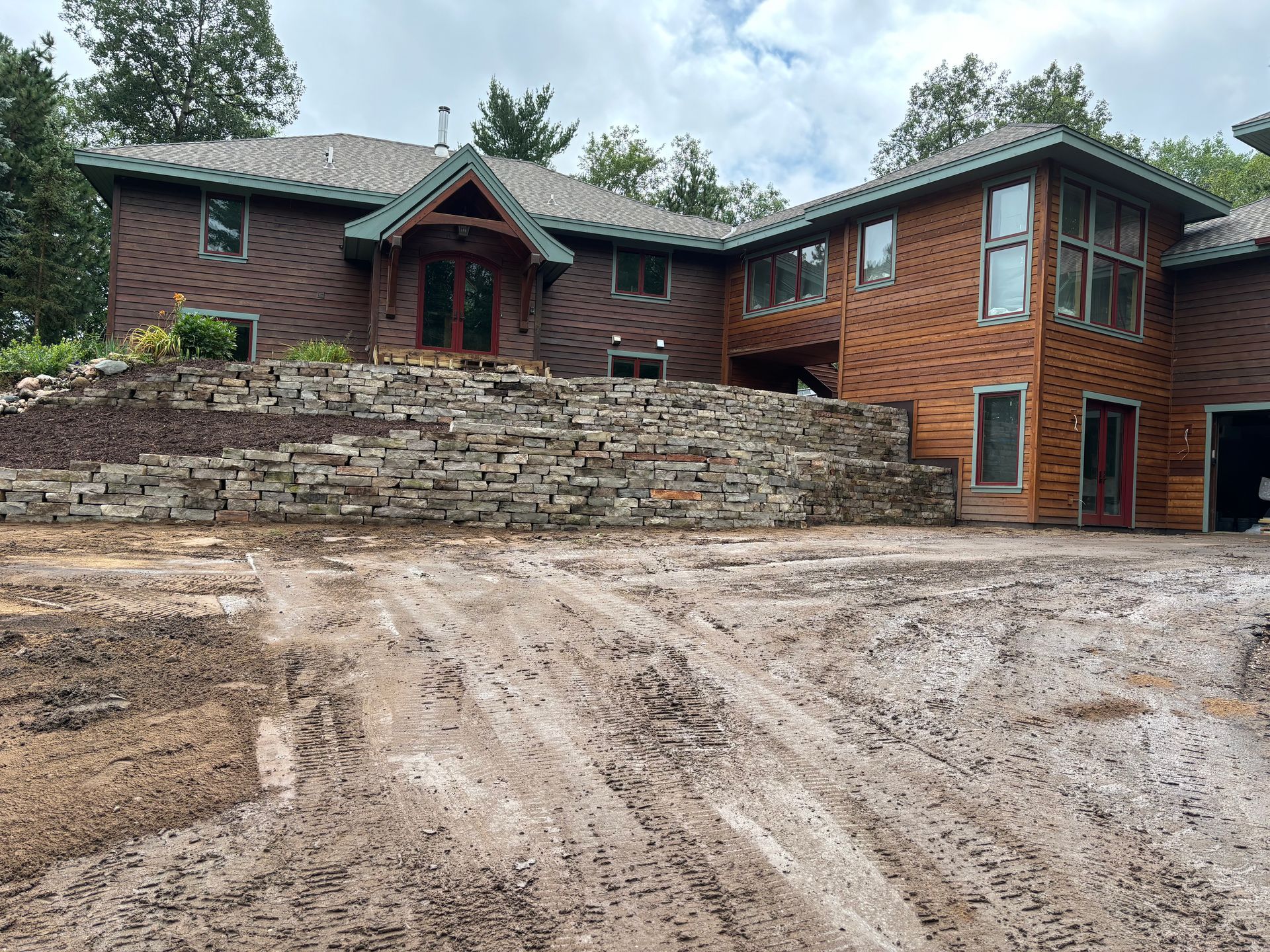
Choosing the right build: block systems vs. concrete
There isn’t a one-size-fits-all answer here. The right choice depends on what the wall needs to do, how tall it is, what’s above it, and what your site is doing with water. Two common directions are segmental block walls and formed concrete walls.
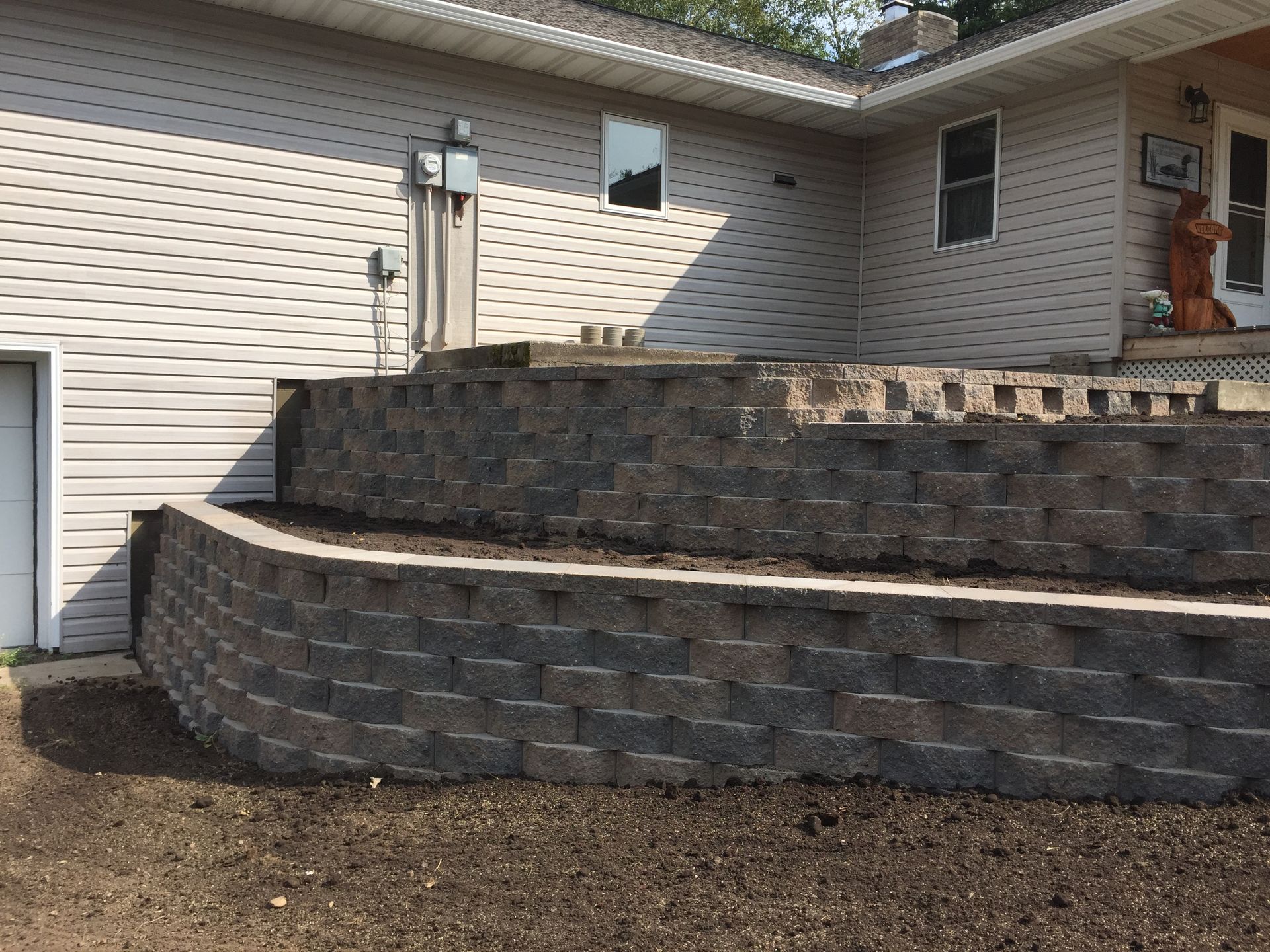
Segmental walls using retention wall blocks
Segmental walls are built from interlocking units—often called retention wall blocks—stacked in a way that steps back slightly as they rise. That setback helps the wall resist pressure. But the blocks themselves don’t “do the work” alone.
The real work is in the base, the drainage layer, the backfill, and the compaction. And when conditions call for it, reinforcement. Many segmental systems are designed to work with geogrid, which ties the wall into the slope behind it for added stability.
These walls are popular for a reason. They look clean. They can curve with the landscape. And they’re adaptable when you want the design to flow—especially when paired with landscape blocks for steps, borders, and small transitions.
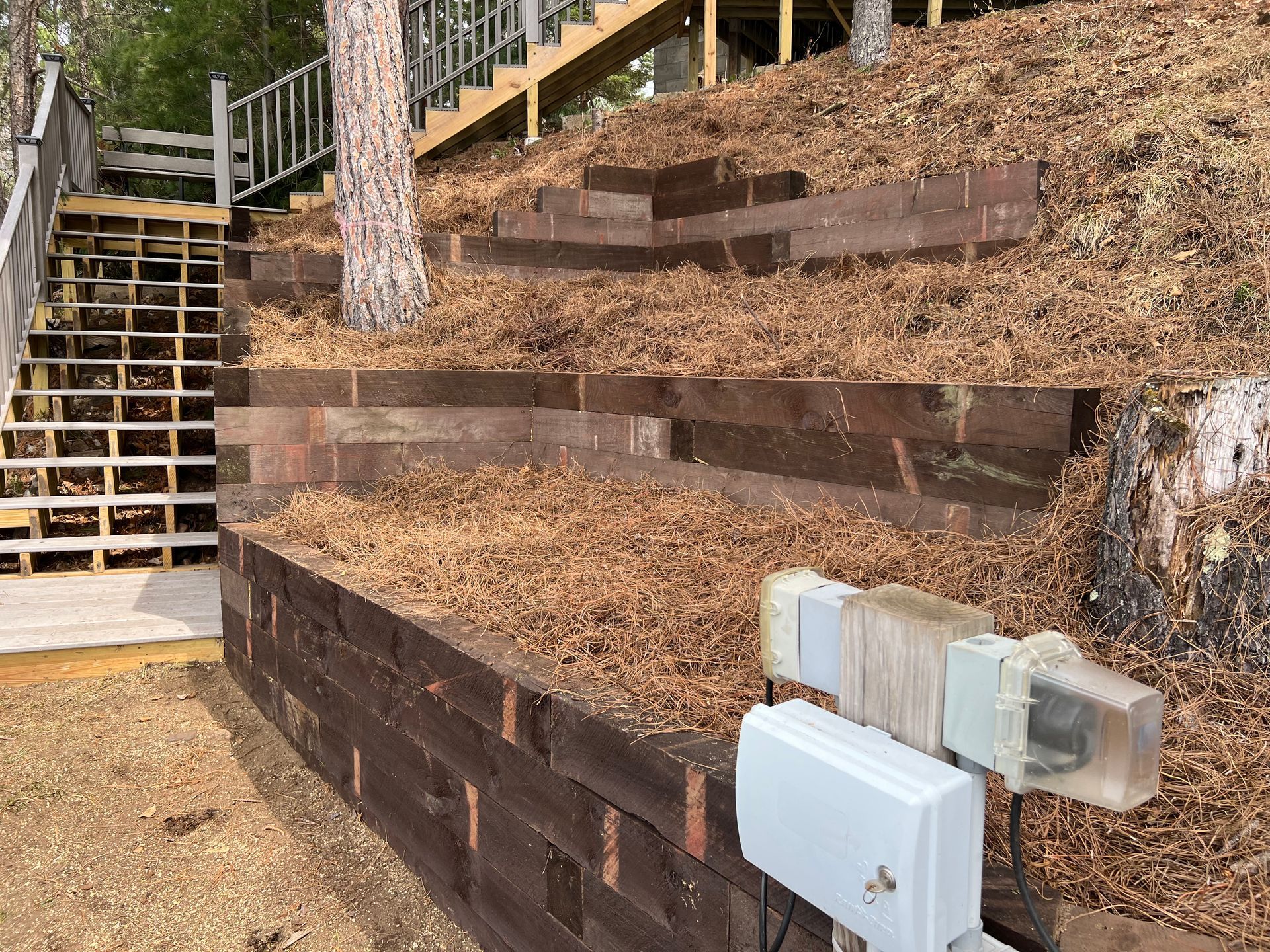
Cement retaining wall and poured concrete options
Sometimes a poured wall is the better fit. A cement retaining wall—often meaning a formed and poured concrete wall—can be ideal when you need a solid, monolithic structure with tight tolerances. Think clean lines, straight runs, or situations where the wall is supporting a heavier load.
A concrete retention wall is also a strong option when you’re dealing with driveways, parking areas, or structural edges where a rigid system makes sense. Concrete can be finished in several ways, too. Smooth. Textured. Faced. The key is that it’s still only as good as the footing and drainage behind it.
Natural stone styles, including a sandstone retaining wall
For some properties, natural stone just fits. A sandstone retaining wall brings a classic look that blends into the landscape—especially when the site already has natural rock features or a more rustic aesthetic.
But stone walls aren’t “old-school” by default. They still need the right base, smart drainage, and careful placement so the stones lock together. Dry-stack styles can work for lower applications. Taller walls need more planning and, in many cases, reinforcement details that aren’t visible once the wall is finished. That’s fine. Better, actually.
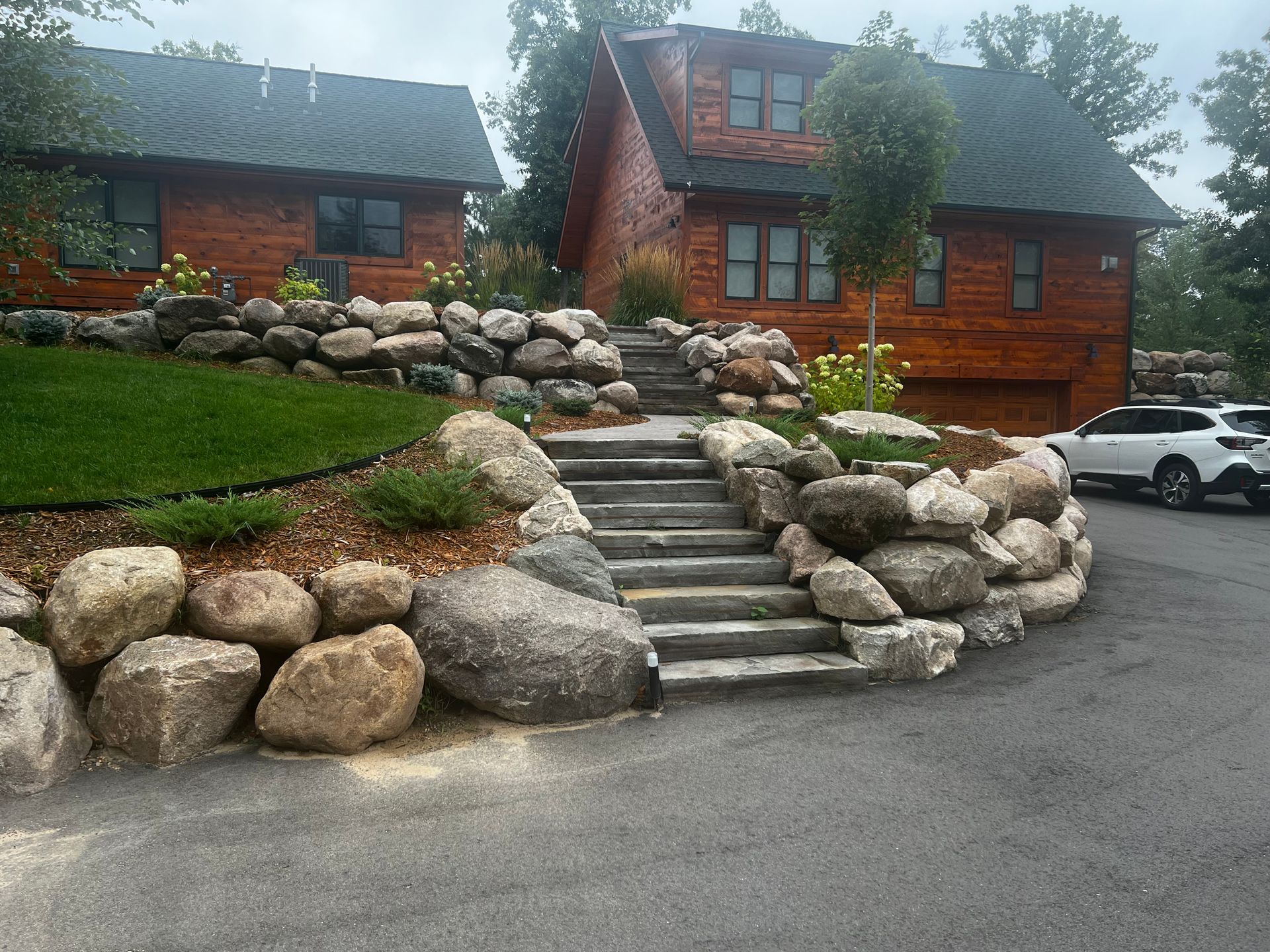
How retaining walls hold up over time
A retaining wall that lasts isn’t built on hope. It’s built on fundamentals. Most of them aren’t flashy. They’re just non-negotiable.
This is where everything starts. If the wall is sitting on soft soil, or the base isn’t deep and compacted correctly, you’ll see settlement. Usually uneven. Then the wall starts chasing that movement.
A proper base is excavated to stable ground, built with the right aggregate, and compacted in layers. Not rushed. Not “good enough.” Level matters here.
Water is heavy. Saturated soil pushes harder. And once freezing temperatures show up, trapped moisture becomes a lever.
Drainage is built into the system: free-draining material behind the wall, and a way for water to escape instead of building pressure. If a wall doesn’t have a plan for water, it’s only a matter of time.
The backfill behind the wall needs to be stable and drain well. It also needs to be placed and compacted in lifts. Dumping random fill behind a wall is one of the fastest ways to create voids and weak spots.
The goal is uniform support. Consistent density. No surprises later.
Not every wall needs reinforcement. But plenty do—especially taller walls, slopes with poor soil, or walls with loads near the top.
For block walls, that often means geogrid. For concrete systems, reinforcement is commonly rebar tied to the wall and footing design. Different systems. Same principle: you build for the forces you expect, not the forces you hope for.
Caps aren’t just decoration. They help lock the top course, shed water, and protect edges. Finish grading matters just as much—because surface water should move away from the wall, not toward it.
And the details… steps, corners, edges. That’s where a wall either looks intentional or looks like an add-on.
Benefits that actually matter day to day
A good wall should solve real problems, not create new ones
More usable space. Sloped yards become terraced and functional
Less erosion. Soil stays where it belongs instead of washing out
Cleaner transitions. Defined edges around beds, patios, and walkways
Better control of water movement. You’ll notice it during heavy rain
Long-term stability. A wall built as a system won’t slowly drift out of line
Tidy planting areas. Planter walls keep beds contained and manageable
And yes—done right, it looks good. But performance comes first.
Common situations we see
Retaining walls tend to show up at the same moments for a lot of homeowners.
A wall that’s leaning or separating
If the existing wall is moving, the “why” matters more than the “how bad.” Sometimes a section can be rebuilt. Sometimes the wall needs to come out and be done correctly from the base up. Patchwork fixes often look fine… until the next season does what it always does.
A sloped yard that’s hard to use
This is one of the best reasons to build a wall. Terracing can turn a steep slope into multiple levels that make sense—space for seating, gardens, pathways, or just a lawn you can actually maintain.
Edges supporting hardscape or traffic
When a wall supports a patio edge, a driveway, or a walkway, movement becomes a problem fast. Cracked pavers. Settling. Gaps. That’s where reinforced block systems or concrete solutions are often the right call.
Planter walls that stay sharp
Short walls still need proper prep. A lot of planter walls fail because people treat them like decorative edging. But they’re still holding back soil. They still see water. And they still need a stable base.
Projects that need matching steps and transitions
This is where concrete wall blocks can really shine—especially when steps, corners, and transitions need to look clean and consistent. The wall shouldn’t feel separate from the rest of the landscape. It should tie everything together
How we approach retaining wall work
We don’t wing it. And we don’t build walls the same way on every property without checking the site conditions. But the standards stay consistent.
1) Site evaluation and scope
We look at slope, soil conditions, water flow, access, what’s above the wall, and what the wall needs to support. This is usually where the right solution becomes obvious.
2) Material selection that fits the job
Sometimes block is the best choice. Sometimes concrete is. Sometimes a natural look makes more sense, including stone options like a sandstone retaining wall. We match the system to the function and the finished look you want—without forcing a material that doesn’t fit.
3) Layout, elevation planning, and tie-ins
Heights, returns, curves, steps, caps, and transitions are planned before excavation starts. Most issues come from changing the plan mid-build.
4) Base, drainage, backfill, compaction
This is the core of the job. And it’s where shortcuts show up later. We build the base correctly, manage drainage, and compact in lifts so the wall behaves like a wall—not like a stack.
5) Finish grading and cleanup
We shape the surrounding grades so water sheds properly and the wall sits naturally in the landscape. Clean lines. Proper transitions. No awkward “lips” that collect water.
If you’re comparing retaining wall contractors, pay attention to how they talk about base depth, compaction, and drainage. That’s the real difference between a wall that lasts and one that slowly becomes a problem.
Areas We Serve
Pequot Lakes, Outing, Fifty Lakes, Nisswa, Lakeshore, Hackensack, Crosslake, East Gull Lake, Walker, Emily, Pine River, Brainerd, Baxter, Breezy Point, Crosby
Frequently Asked Questions
How do I know whether I need a retaining wall or just regrading?
If the slope is mild and there’s room to reshape it, regrading can sometimes solve the issue. A retaining wall is usually the better choice when you need to hold a specific elevation, protect a nearby structure, or stop repeated erosion in the same spot.
What causes retaining walls to lean or fail?
Most failures trace back to base problems or water pressure. Poor compaction, the wrong backfill, and missing drainage are common. Once water builds behind the wall, movement tends to follow.
Do shorter walls still need drainage?
They still need a plan for water. Even low walls can shift if saturated soil is pushing on them or if runoff collects behind them. Drainage details vary, but the principle doesn’t change.
What affects the overall scope and cost of the project?
Wall height and length are obvious factors, but site access, soil conditions, and drainage needs matter just as much. Reinforcement requirements and removal of an existing wall can also change the scope significantly.
How long does a typical retaining wall project take?
It depends on the size of the wall, weather, access, and how much excavation is involved. Smaller walls can move along quickly, while reinforced walls take longer because base work and compaction can’t be rushed.
Let’s talk through the right solution
If you’re dealing with a slope that won’t hold, erosion that keeps coming back, or a wall that’s starting to move, we’ll take a practical look and give you clear options. No fluff. Just a retaining wall plan that makes sense for your property—and is built to stay put.